

The Case for College:
Rebuilding Trust and Reimagining the Possibilities of Higher Education for FGLI Students
The value and purpose of higher education has been increasingly challenged within a broader climate of polarization, distrust in institutions, and growing economic uncertainty. While questions rooted in affordability and return-on-investment miss the realities of financial aid and long-term outcomes, we cannot ignore the real questions that students and families have about the worth of higher education.
As practitioners of FGLI student support, these questions are actually not new. We have long been tasked with translating the value of higher education to communities who are skeptical or unfamiliar with its pathways and promises, and with ensuring that our institutions are of actual value to all of our students, regardless of their background. And, we have remained committed to creating robust communities among students with widely different belief structures. How, then, might we think about the unique expertise and knowledge that we bring to these conversations?
How do we continue to foster trust with students and external communities in this complicated environment? How can we help our institutions in demonstrating and translating the importance of holistic learning and growth that takes place during college? What can our role be in institutional change as the needs of first-generation and low-income students become increasingly urgent and complex? And, as these students begin their journeys on campus, how do we help ensure they are equipped to enter the workforce with tangible tools and skills, and are prepared to pursue careers that are both stable and meaningful?
Our 2025 conference invited us to remember our North Stars as we navigated a time of uncertainty – to move forward in alignment with our mission of access and success for FGLI students as we made budgetary pivots and programmatic transformations in response to philosophical challenges and material instability. Now, in 2026, we must look to the horizon despite the headwinds. We are called to remind the communities we serve about our commitment, and we have an opportunity to revitalize the image we hold of what higher education truly is and can be. There is a strong case for college, now more than ever before. This year’s conference asks us to re-engage that truth with our eyes on the future – for our institutions, for our programs, and for our students.
Opening Panel
Higher Education and the Public Trust: How We Got Here and Where We Go Next


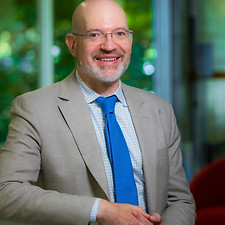
Benjamin Justice
Distinguished Professor of Education
Rutgers University Graduate School of Education
Faculty Keynote
Rebecca M. Carey

Pre-Conference Special Seminars
Emerging Research in the Field of FGLI Student Access, Support, and Belonging
This three-hour pre-conference experience aims to engage early career professionals in an immersive survey of current scholarship related to trending topics in higher education. Participants will engage directly with competing and complicated scholarship across three areas where trust is most easily eroded: the value of higher education and how to position selective, liberal arts degrees to first-generation students; the distinction between student "belonging" and student "mattering," and the practitioner's role in cultivating each; and, lastly, the tension between encouraging experiential pathways and pathways oriented toward economic mobility.
Through a guided large-group model and small-group practice, participants will build a transferable tool for reading and evaluating academic scholarship. The session closes with a reflective exploration of the tension between one's professional perspective and one's practitioner lens.
Presenter:
-
Dawn M. Wilson | Senior Associate Director of College Preparation Initiatives at the Emma Bloomberg Center for Access & Opportunity at Princeton University
Myths and Realities:
Supporting Student Career Development
As the world of work evolves in several dimensions, colleges and universities are increasingly called upon to defend the value of higher education by demonstrating clear, strong career outcomes. As the modern workforce shifts, traditional career playbooks are falling short—especially for first-generation, low-income (FGLI) students. Relying on outdated assumptions about post-graduate paths limits our students' potential and weakens higher ed's value proposition.
This session will help participants across various roles understand the most common myths about career preparation and identify new ways of helping FGLI students develop, communicate, and leverage relevant and transferable career skills. Through research, interactive activities, and independent reflection, participants will leave this session with an understanding of how to move beyond old paradigms and develop concrete strategies that prepare FGLI students for a dynamic world of work where adaptability and informed risk-taking are essential to success.
Presenters
-
Sharon Belden Castonguay | Executive Director, Gordon Career Center, Wesleyan University
-
Sandra Nanita | Director of Partnerships, Learning, and Impact, The Opportunity Network
-
Stefania Trelles | Assistant Director of Learning and Development, The Opportunity Network
Supporting Non-U.S. Citizen Students in an Era of Uncertainty
Higher education professionals are increasingly called upon to support students whose immigration status, citizenship, or family circumstances may intersect with their academic, financial, and personal well-being. For first-generation, low-income (FGLI) students who are also international or non-U.S. citizens, these challenges can be particularly complex, requiring institutions to navigate overlapping support systems, institutional responsibilities, and legal considerations.
This three-hour, interactive pre-conference seminar will explore how colleges and universities can build coordinated, student-centered, and legally compliant support systems for non-U.S. citizen students during periods of immigration-related uncertainty. The seminar is not designed to provide legal training or interpret immigration law. Instead, it focuses on institutional readiness, cross-campus collaboration, and developing clear practices that allow professionals to respond effectively while knowing when and how to engage appropriate legal and institutional partners.
Drawing on the Access Barnard model, the seminar will examine how Opportunity Programs, FGLI initiatives, International Student Services, and other campus partners can work collaboratively to support students whose identities and circumstances cross traditional institutional boundaries. Participants will consider how FGLI and non-U.S. citizen students may experience overlapping financial, academic, emotional, and institutional barriers—and how fragmented campus systems can unintentionally compound those challenges.
Presenter
-
Elida Martinez Gaynor | Director of Opportunity Programs, Barnard College